Three ownership categories
Assisted living communities in the United States generally fall into one of three ownership categories:
Family-owned. A single family or small group owns the community, often the building too. Decisions are made locally. Profits stay local. Staff often have direct relationships with the owner.
Regional operator. A company that operates a portfolio of communities (often 5 to 50) within a state or region. There is a corporate office, but the ownership is held privately and decisions are still relatively close to the buildings.
National corporate or REIT-owned. Large operators with 50 to 1000+ communities, often owned by a real estate investment trust or private equity firm. Decisions happen at a corporate level. Buildings are real estate assets in a portfolio.
All three can deliver good care. All three can deliver bad care. But the structural incentives differ, and the differences show up in patterns.
What family ownership actually changes
Decision speed. A family-owned community can change a policy, a vendor, or a staffing model in a single conversation. A corporate-owned community routes the change through a regional director, a corporate office, and an approval process that can take months.
Staff tenure. Direct-care staff often stay longer at family-owned communities. The owner is a person, not a portfolio number. Wage decisions, schedule changes, and recognition come from people the staff actually know.
Profit pressure. A REIT-owned community has shareholder distributions to make every quarter. That pressure manifests as cost-cutting in the line items families notice last and feel first: food quality, staffing levels at night, deferred maintenance.
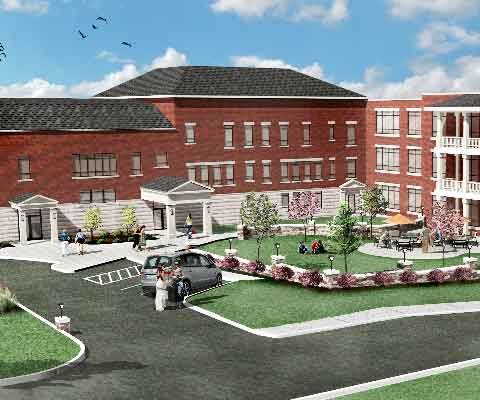
Continuity. Family-owned communities rarely change names, brand, or leadership. Corporate communities can be sold from one operator to another, sometimes without the families being told ahead of time. Sterling Meadows is owner-operated by Cliff White, a second-generation senior living operator with roots in his family's assisted living business.
Local accountability. A complaint at a family-owned community escalates to the owner directly. A complaint at a national operator escalates to a regional director who covers many buildings. The accountability path is longer.
Where corporate ownership has advantages
It is worth being honest about the other side:
- Bigger operators often have more polished training programs.
- National brands have more capital for renovations and equipment.
- Regional and corporate operators often have more sophisticated technology.
A family-owned community has to compete on these fronts deliberately. The good ones do.
The roll-up wave in Kentucky senior living
Over the past decade, private equity and real estate investment trusts have acquired a significant share of assisted living communities across the country, including in Kentucky. The pattern works like this: a regional operator with eight or ten communities sells to a larger platform. The staff hears about it through a memo. The residents learn about it from their families. The building gets a new name on the sign. A regional director who has never been inside starts appearing on calls.
That is not a hypothetical. It has happened to communities within thirty miles of Mt. Sterling.
The incentive behind a roll-up acquisition is cost synergy and portfolio scale. That translates, in practice, to standardized food contracts (the regional kitchen vendor replaces the local one), centralized scheduling software, and headcount targets expressed as cost-per-occupied-bed ratios. None of those decisions are made by the person who runs the building.
Research on staff turnover in long-term care is consistent on one point: direct-care staff leave communities at much higher rates when they do not know or cannot reach the decision-makers who affect their work. Annual turnover rates above 60 percent are common in large corporate operations. The downstream effect on residents is real. A resident with early dementia relies on familiar faces. When the faces change every eight months, the disorientation shows up in behavior.
What this looks like on a tour
You cannot always tell who owns a community by looking at the building. The brick portico may look the same whether the community is family-owned or two layers inside a REIT structure. Here is what surfaces the answer:
Ask directly. "Who owns this community?" A family-owned community will give you a name. A community that is part of a larger portfolio will name the management company or the parent brand. If the answer is vague, ask again.
Ask about the last ownership change. If the community has been sold or rebranded in the last five years, ask what changed for residents when the sale happened. Listen for whether the answer is specific or generic.
Notice the staffing answer. Ask the person leading your tour how long they have been there and who they report to. If the answer involves a regional director based in another city, the decision-making is not local.
Watch the food and common areas. These are the first line items that get cut under cost pressure. A community that is running lean on maintenance or serving mediocre food under a corporate contract is usually doing so because a spreadsheet in another city said to.
Ask about the last time a policy changed for residents. At Sterling Meadows, that conversation happens with the same people who have been here for years. The owner is in the building regularly. Decisions about staffing, menus, activities, and vendor contracts do not require a regional sign-off.
Decision speed in practice: a real scenario
Here is what a decision at a family-owned community looks like compared to a corporate one.
A resident's family notices that the evening medication pass is running 45 minutes later than the scheduled time, affecting a blood pressure medication that has a timing window. At a family-owned community, the family calls the owner or the director. The issue is on the schedule for tomorrow. A process fix is in place within the week.
At a corporate community, the same observation becomes a ticket to the regional director. The regional director schedules a call. The call is in two weeks. The response involves a standard policy document and a note that staffing levels during the evening shift are a known constraint being addressed in the next budget cycle.
Neither outcome is guaranteed by ownership type. But the structural path to resolution is shorter when the decision-maker is in the building.
The questions that surface ownership
- "Who owns this community?"
- "Has it been sold or changed hands in the last five years?"
- "Who makes the staffing decisions, and where are they physically based?"
- "What is the executive director's tenure here?"
The bottom line for families
Family ownership is not a guarantee of good care. It is a signal of structural incentives. The owner of a family-owned community lives or dies by the reputation of one or two buildings. The owner of a 200-community portfolio does not.
If two communities seem comparable on care, staffing, and pricing, ownership is the tiebreaker. The right answer is the one that is going to be the same five years from now.
Frequently Asked
Are family-owned assisted living communities better?
Not automatically. Family ownership is a structural signal, not a guarantee. But the good family-owned communities tend to have longer staff tenure, faster decision-making, and more direct accountability than larger corporate operators.